
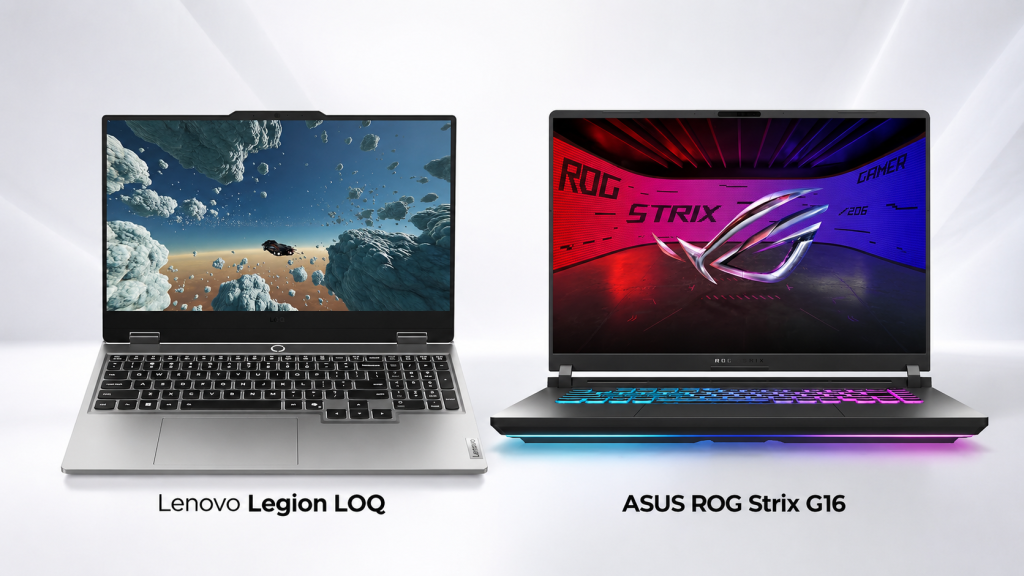
ASUS ROG Strix G16 (2025) vs. Lenovo LOQ 15IRX10: Which Gaming Laptop Is Better?
Looking for a gaming laptop with a high-refresh-rate display, Intel Core i7 performance and NVIDIA’s latest RTX 50 Series graphics?
The ASUS ROG Strix G16 and Lenovo LOQ 15IRX10 offer similar amounts of memory and storage, but they belong to different performance and price categories.
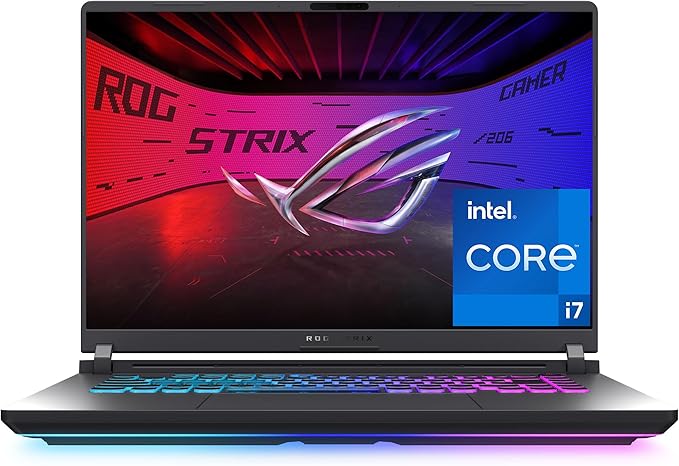
The ASUS ROG Strix G16 is the more powerful and premium gaming machine. It combines a 14th-generation Core i7 processor, an RTX 5060 Laptop GPU, a 16-inch 165Hz display, advanced cooling, a 90Wh battery and extensive RGB lighting.
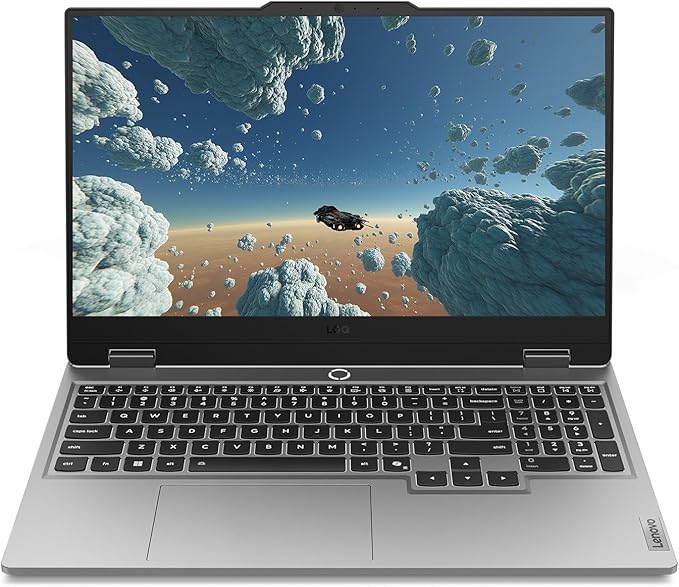
The Lenovo LOQ 15IRX10 focuses on value. It provides a Core i7-13650HX processor, an RTX 5050 Laptop GPU, a 15.6-inch 144Hz display, 16 GB of memory and 1 TB of storage at a generally lower purchase price.
Main Difference
The most important difference is the graphics card. The ASUS ROG Strix G16 uses an NVIDIA GeForce RTX 5060 Laptop GPU, while the Lenovo LOQ uses the lower-tier RTX 5050 Laptop GPU.
The ASUS runs its RTX 5060 at up to 115W and includes 8 GB of GDDR7 video memory. The Lenovo’s RTX 5050 also has 8 GB of GDDR7 memory but operates at up to 100W in this chassis. The higher GPU tier and higher power allowance give the ASUS a clear advantage in demanding games, ray tracing, rendering and GPU-accelerated creative applications.
The ASUS also has the faster processor, a larger 16:10 display, a bigger battery, more advanced cooling and faster wireless connectivity.
The Lenovo is lighter and usually considerably less expensive. It still offers the essential features required for smooth 1080p gaming, including G-SYNC, Advanced Optimus, a 144Hz display and DLSS 4 support.
This is a title
The ASUS configuration in this comparison is the ROG Strix G16 G615JMR-AS74, which includes:
- Intel Core i7-14650HX
- NVIDIA GeForce RTX 5060 Laptop GPU
- 8 GB of GDDR7 video memory
- 16 GB of DDR5-5600 memory
- 1 TB PCIe 4.0 SSD
- 16-inch 1920-by-1200 display
- 165Hz refresh rate
- Windows 11 Home
- Wi-Fi 7
The Amazon listing and ASUS specification page identify this exact configuration and model number.
The Lenovo configuration is the LOQ 15IRX10 83JE000XUS, which includes:
- Intel Core i7-13650HX
- NVIDIA GeForce RTX 5050 Laptop GPU
- 8 GB of GDDR7 video memory
- 16 GB of DDR5 memory
- 1 TB PCIe 4.0 SSD
- 15.6-inch 1920-by-1080 display
- 144Hz refresh rate
- Windows 11 Home
- Wi-Fi 6
The Amazon listing identifies the configuration with 16 GB of memory and 1 TB of storage, while Lenovo’s product database confirms the model number and principal hardware.
Design/Build
The ROG Strix G16 gaming design is more aggressive.
It boasts an illuminated ROG logo, a four-zone RGB keyboard, and an Aura Sync chassis light bar. The laptop's design stands out, especially in a gaming setting.
The ASUS is 13.94 by 10.55 inches and 0.90 to 1.21 inches thick. About 5.84 pounds (2.65 kg).
Simple Luna Grey design for Lenovo LOQ. It blends better into schools, workplaces, and professional settings and is more discreet.
Lenovo is 14.17 by 10.19 inches and 0.86 to 0.94 inches thick. About 5.29 pounds (2.4 kg) begins it. Its top and bottom are PC-ABS.
The ASUS is thinner but thicker at its deepest point. Lenovo is 250 grams lighter and more subdued.
Best premium gaming design: ASUS ROG Strix G16
Best discreet, lighter design: Lenovo LOQ
Aspect Ratio and Display Size
ASUS' 16-inch FHD+ display features 1920 x 1200 pixels.
The 16:10 aspect ratio gives it more vertical area than a 16:9 screen. This helps with online surfing, documents, programming, video editing, and productivity since more information fits without scrolling.
ASUS panel offers:165Hz refresh; Advertised 3ms response time; Full sRGB colour; Anti-glare finish; Brightness about 300 nits; Advanced Optimus in NVIDIA G-SYNC; The G615JMR-AS74 has a 1920-by-1200 IPS display, 165Hz refresh rate, 3ms response time, and complete sRGB coverage.
The Lenovo offers a 15.6-inch FHD display with 1920 x 1080 pixels and 16:9 aspect ratio. Its panel provides:144Hz refresh, 300 nit brightness, Full sRGB colour, Anti-glare coating, NVIDIA G-SYNC, Advanced Optimus.
The Lenovo screen is good for a budget gaming laptop. Buyers who edit photos, graphics, or movies benefit from its complete sRGB coverage.
Similar brightness and colour coverage on both displays. The bigger size, higher aspect ratio, better refresh rate, and promised 3ms reaction time give the ASUS the edge.
Winner: ASUS ROG Strix G16 display
Processor Performance
With the Intel Core i7-14650HX, ASUS pulls it off. It is equipped with:
1. 16 cores in total
2. Eight cores for performance
3. A total of eight cores for efficiency
4. 24 threads for processing
5. Intel Smart Cache up to 30 MB; maximum turbo frequency up to 5.2 GHz
The Intel Core i7-13650HX is used by the Lenovo. Included in it are:
1. Twelve cores in all
2. Featuring six cores optimised for performance
3. A total of eight cores for efficiency
4. Twenty threads for processing
5. Turbo speeds up to 4.9 GHz with 24 MB of Intel Smart Cache capacity
Consequently, the ASUS boasts a bigger cache, a higher maximum turbo frequency, four more threads, and two more performance cores.
Tasks that put a heavy strain on the CPU, such performing:
Coding of videos
The use of three-dimensional models
Software development environment
Executing virtualisation software
Extensive tables
Playing games online
Excessive multitasking
Games that need a lot of processing power, such as strategy and simulation
No less powerful than before is the Lenovo CPU. Modern games, productivity apps, and content production shouldn't be a problem with this still-an-HX-series Core i7.
The CPU in the ASUS, however, is noticeably more powerful.
Processor victor: ROG Strix G16 from ASUS
Audio
The two-speaker setup of the ASUS includes:
- Intelligent Amplifier Innovation
- With Dolby Atmos
- Certified high-resolution headphones
- Array of built-in microphones
- Artificial intelligence for noise reduction
Thanks to these upgrades, you won't need an additional speaker for gaming, movies, or phone calls.
The Lenovo has a dual-microphone array and two 2W speakers that have been optimised using Nahimic Audio.
Either option should give you enough audio for your laptop, but if you're into competitive gaming or work in an environment where directionality is key, headphones are still the way to go.
The ASUS ROG Strix G16 was named best in audio.
Final Verdict
The ASUS ROG Strix G16 is the better gaming laptop overall.
Its RTX 5060, higher GPU power limit, faster processor, 165Hz 16:10 display and more advanced cooling system give it a meaningful advantage in modern games and demanding creative applications.
It is the better choice for buyers who want high graphics settings, ray tracing, competitive gaming, streaming, video editing or a laptop that should remain capable for a longer period.
The Lenovo LOQ 15IRX10 offers better value when it is substantially less expensive.
Its RTX 5050, Core i7 processor, 144Hz G-SYNC display and 1 TB SSD provide a balanced 1080p gaming experience without requiring the higher investment associated with the ROG Strix.
Choose the ASUS ROG Strix G16 when maximum gaming performance, cooling and long-term capability are the priorities.
Choose the Lenovo LOQ when price, portability and solid 1080p gaming matter more than achieving the highest graphics settings.