
Bambu Lab P1S vs Creality K1C – which one is better ?
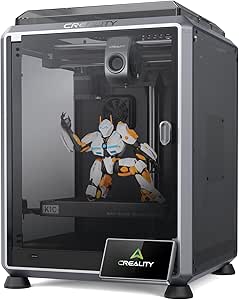
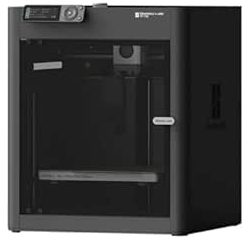
The Bambu Lab P1S and Creality K1C are two excellent enclosed 3D printers for users who want to move beyond entry-level machines. Both use a CoreXY architecture, deliver impressive printing speeds, and support a wide range of filament types.
Although they have several similarities, they follow slightly different approaches. The Bambu Lab P1S focuses heavily on automation, ease of use, and an integrated ecosystem, while the Creality K1C puts more emphasis on technical materials, especially carbon-fibre-reinforced filaments.
Main Differences
One of the first major differences is the build volume.
The Bambu Lab P1S offers a 256 × 256 × 256 mm build volume, while the Creality K1C provides 220 × 220 × 250 mm.This gives the P1S more space for larger projects or for printing multiple parts at the same time.
When it comes to maximum advertised printing speed, however, the Creality K1C has the advantage. It can reach up to 600 mm/s, compared with 500 mm/s on the Bambu Lab P1S.
Both machines can also achieve acceleration figures of around 20,000 mm/s², making them significantly faster than traditional entry-level FDM printers.
However, maximum speed does not always translate directly into faster real-world printing. Model complexity, filament type, slicer settings, and desired print quality all influence the final printing time.
Ease of Use
Ease of use is one of the strongest advantages of the Bambu Lab P1S.
Bambu Lab has designed its ecosystem around minimizing the amount of manual configuration required before printing. For users who simply want to prepare a model, send it to the printer, and obtain consistent results, the P1S is one of the most attractive options in its category.
Another important advantage is compatibility with Bambu Lab's AMS system.
AMS allows users to automatically switch between multiple filaments, making multicolor and multi-material printing significantly easier. This also gives the P1S a strong upgrade path for users who want to experiment with more advanced projects in the future.
The Creality K1C is also a modern and highly automated printer. It offers Wi-Fi and USB connectivity, OTA firmware updates, remote monitoring, and an integrated camera.
However, Bambu Lab's combination of hardware, software, and ecosystem generally provides a more streamlined overall experience.
Winner for ease of use: Bambu Lab P1S
Print Quality and Speed
Both printers use CoreXY motion systems, allowing them to move quickly while maintaining good mechanical stability.
The P1S reaches a maximum advertised speed of 500 mm/s, while the K1C can reach 600 mm/s.On paper, the K1C is faster. In practice, however, print consistency is often more important than the maximum number shown on the specification sheet.
The Bambu Lab P1S benefits from a highly integrated combination of hardware, firmware, and slicing software, making it particularly attractive for users who want reliable high-speed printing without constantly adjusting settings.
The Creality K1C uses a Direct Drive extruder and an all-metal hotend capable of reaching temperatures of up to 300°C. It also includes a wear-resistant nozzle designed to handle more abrasive materials.
Maximum printing speed: Creality K1C
Carbon Fiber Printing
This is one area where the Creality K1C becomes especially interesting.
The printer was specifically designed with reinforced filaments in mind. It supports materials such as PLA-CF, PA-CF, and PET-CF, in addition to more common filaments such as PLA, PETG, TPU, ABS, ASA, PC, and PA.
Its Direct Drive extrusion system, all-metal hotend, 300°C maximum nozzle temperature, and wear-resistant nozzle make the K1C a strong option for users who want to produce functional components, prototypes, mechanical parts, or stronger technical prints.
The Bambu Lab P1S can also work with a wide variety of materials, but users who regularly print abrasive carbon-fiber composites may find the K1C's hardware configuration especially appealing.
Winner for carbon fiber printing: Creality K1C
Which One Should You Buy?
The Bambu Lab P1S is probably the better option for most users.
It combines fast printing, a larger build volume, excellent automation, and one of the most polished 3D-printing ecosystems available. Compatibility with the AMS system also makes it particularly attractive for users interested in multicolor printing.
The Creality K1C, however, can be the better choice for users who want to focus on functional components and technical filaments.
Its 300°C hotend, wear-resistant nozzle, high printing speed, and strong support for carbon-fiber-reinforced materials make it a versatile machine for more demanding projects.
Final Verdict
Choose the Bambu Lab P1S if you want:
- A larger build volume;
- A simpler and more automated printing experience;
- Excellent print speed and quality;
- Compatibility with Bambu Lab AMS;
- Easy multicolor printing;
-A versatile printer for many different types of projects.
Choose the Creality K1C if you want:
- Strong compatibility with carbon-fiber filaments;
- A maximum speed of up to 600 mm/s;A 300°C all-metal hotend;
- A wear-resistant nozzle for abrasive materials;
- A printer focused on prototypes and functional parts.
Overall, the Bambu Lab P1S is the more balanced 3D printer for most users, especially for those who prioritize ease of use, reliability, and ecosystem integration.
The Creality K1C is the more specialized alternative, particularly attractive for users who regularly work with carbon-fiber-reinforced and other technical materials.
Which One Should You Buy?
The Bambu Lab P1S is probably the better option for most users.
It combines fast printing, a larger build volume, excellent automation, and one of the most polished 3D-printing ecosystems available. Compatibility with the AMS system also makes it particularly attractive for users interested in multicolor printing.
The Creality K1C, however, can be the better choice for users who want to focus on functional components and technical filaments.Its 300°C hotend, wear-resistant nozzle, high printing speed, and strong support for carbon-fiber-reinforced materials make it a versatile machine for more demanding projects.