
Xbox Series X vs. Xbox One S: Which Console Is the Better Choice?
Looking for the best Xbox console for gaming, streaming, and entertainment? Here, we compare the Xbox Series X with the Xbox One S to understand how much performance has changed between generations and whether upgrading is worth it.This comparison covers the standard Xbox Series X with a 1 TB SSD and disc drive, not the smaller Xbox Series S.
Main Differences
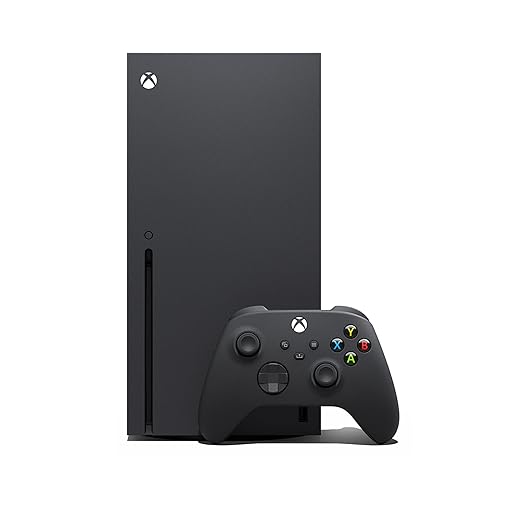
The Xbox Series X is the better option for players who want modern games, native 4K performance, faster loading times, higher frame rates, hardware-accelerated ray tracing, and a console designed for current-generation releases.
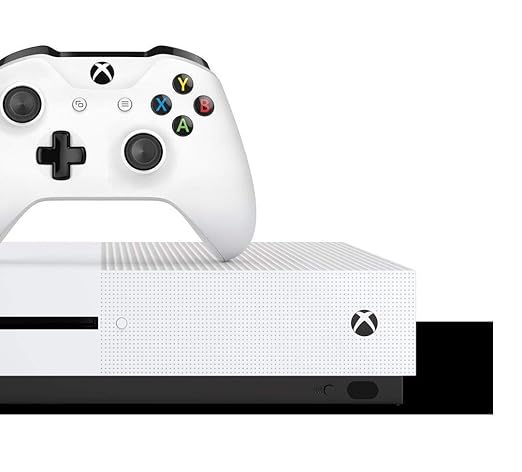
The Xbox One S is an older and considerably less powerful console. However, it can still be useful for playing Xbox One titles, selected backward-compatible games, streaming 4K video, and watching 4K Ultra HD Blu-ray discs.
The difference is not simply an improvement in graphics. The Series X provides a much faster processor, a dramatically more powerful GPU, an NVMe SSD instead of a mechanical hard drive, and several features that are unavailable on the One S.
Gaming Performance
Performance is where the Xbox Series X establishes its biggest advantage.
The Series X uses a custom eight-core AMD Zen 2 processor running at up to 3.8 GHz, combined with an RDNA 2 GPU capable of 12 teraflops. It also includes 16 GB of GDDR6 memory. Microsoft designed the console to deliver games at 4K and 60 frames per second, with support for up to 120 frames per second in compatible titles.
The Xbox One S uses an older eight-core Jaguar processor running at 1.75 GHz. Its GPU delivers approximately 1.4 teraflops, while the system has 8 GB of DDR3 memory. These specifications are sufficient for Xbox One-era games but are far behind the hardware found inside the Series X.
The Series X therefore offers more stable frame rates, higher resolutions, better textures, greater visual complexity, and improved performance in demanding open-world and multiplayer games.
Resolution and Graphics Quality
The Xbox Series X is designed as a true 4K gaming console. Many optimized games can run at 4K and 60 frames per second, while selected performance modes can reach 120 frames per second. Actual resolution and frame rate still depend on the individual game and the mode selected by the player.
The Xbox One S can output a 4K signal, but it should not be considered a native 4K gaming console. Its main 4K advantages are video streaming, Ultra HD Blu-ray playback, and upscaling lower-resolution content for a 4K television.
In practical terms, Xbox One S games commonly operate at lower resolutions and frame rates, while the Series X is capable of producing sharper images, smoother movement, better shadows, more detailed environments, and higher-quality visual effects.
Frame Rates and Competitive Gaming
The Xbox Series X supports frame rates of up to 120 FPS in compatible games and displays. This can make movement feel smoother and controls more responsive, particularly in racing games, shooters, fighting games, and competitive multiplayer titles.
The Xbox One S is generally designed around 30 FPS or 60 FPS experiences, depending on the game. It does not have enough processing or graphics power to offer the same high-frame-rate modes available on the Series X.
A compatible 120 Hz television or monitor is required to experience 120 FPS. Without one, the Series X will still provide major benefits in loading speed, resolution, stability, and image quality.
Loading Times and Storage
The Series X uses a custom 1 TB NVMe SSD, while the Xbox One S was sold with 500 GB, 1 TB, or 2 TB mechanical hard drives.
This is one of the most noticeable differences during normal use. The Series X can start games, load maps, install updates, and move between menus substantially faster than the One S.
Its Xbox Velocity Architecture also allows developers to stream game data more efficiently, helping create larger and more detailed environments without the same loading limitations associated with mechanical drives.
The Series X additionally includes Quick Resume, which can keep multiple compatible games suspended and allow players to continue close to where they stopped. The Xbox One S does not support this current-generation feature.
Controllers and Accessories
Many Xbox One controllers and accessories are compatible with Xbox Series X. This means players upgrading from a One S can often continue using existing wireless controllers, headsets, and other supported accessories.
The Series X controller introduces refinements such as a Share button, an updated directional pad, improved grip textures, and reduced input latency, but the general layout remains familiar.
Important Limitations
The Xbox Series X is considerably larger and generally more expensive than a second-hand or refurbished Xbox One S. Its 1 TB storage can also fill quickly when installing modern games, which may exceed 100 GB each.
Additional Series X|S storage expansion can be expensive, particularly when using proprietary expansion cards that provide the performance required for current-generation games.
The Xbox One S is more affordable, but its age creates important limitations. Loading times are longer, performance is substantially lower, and it cannot run titles developed exclusively for Xbox Series X|S.
Buying a One S today only makes sense for someone with a very limited budget, an existing collection of Xbox One games, or a primary interest in media playback and older titles.
What Xbox Should You Buy?
Looking for the Xbox Series X? You should get:
- Native 4K gameplay with support for up to 120 FPS
- Load faster using an NVMe SSD
- Modern games designed for Xbox Series X|S
- Ray Tracing (hardware accelerated)
- Better backward compatibility and Fast Resume
- Value and performance improve with time
Opt for the Xbox One S if you want:
- Budget gaming console for Xbox One generation
- 4K streaming & Ultra HD Blu-ray™ player
- Selected Xbox 360 and original Xbox games Available
- A less expensive console for casual/secondary use
- A system for an existing physical game collection
- First and foremost a system for an existing physical game collection
Final Verdict
The Xbox Series X is the clear winner. It is not a minor upgrade over the Xbox One S—it represents a complete generational change in processing power, graphics performance, storage speed, and game compatibility.
The Xbox One S can still be useful as an affordable entertainment system or a console for older games. However, players interested in current releases, 4K gaming, faster performance, and longer-term support should choose the Xbox Series X.