
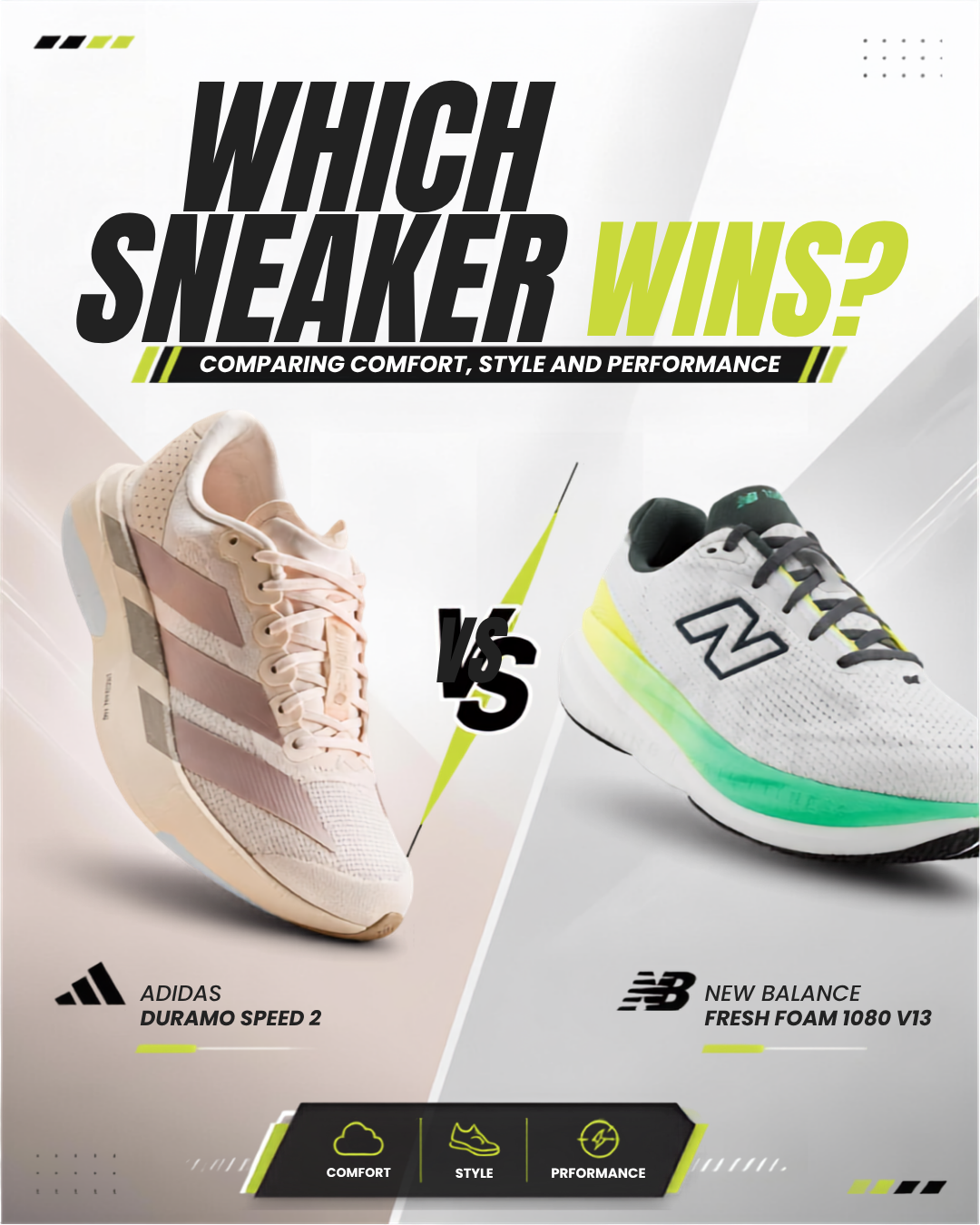
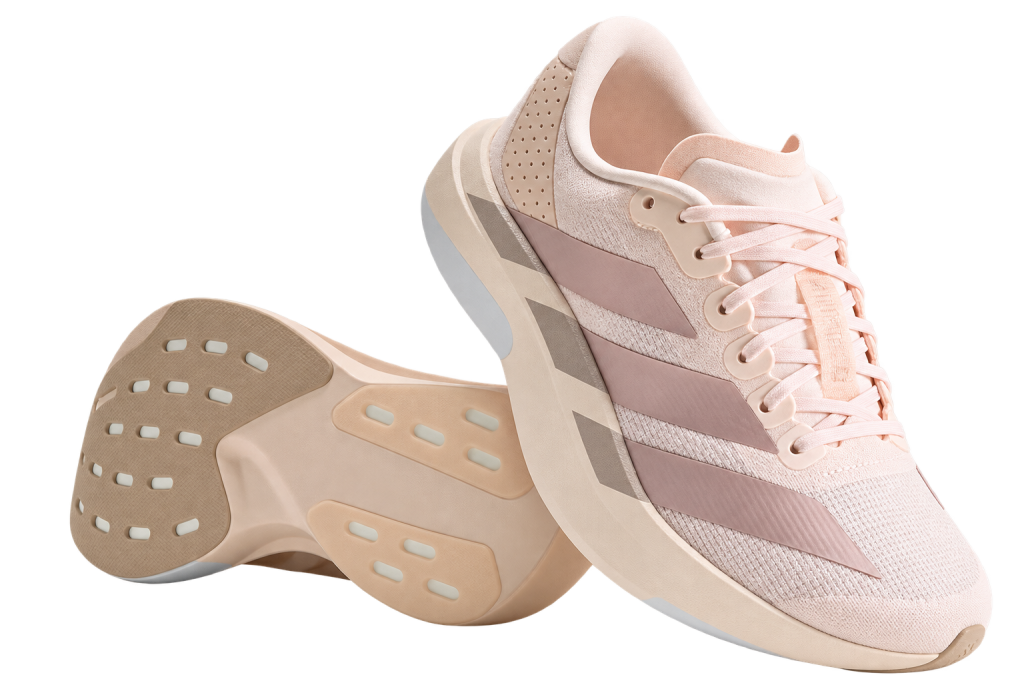
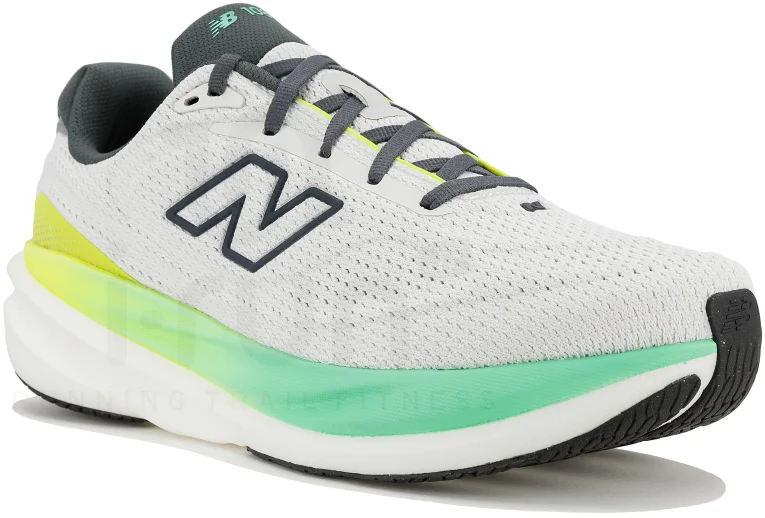
Looking for a versatile running shoe for daily training, long runs, or faster workouts? The adidas Adizero EVO SL and the New Balance 1080 v15 are two excellent options, but they approach running from very different perspectives.
The adidas Adizero EVO SL is a lightweight, energetic performance trainer inspired by adidas’ racing shoes. It uses premium Lightstrike Pro foam and prioritizes speed, responsiveness, and versatility.
The New Balance 1080 v15 takes a more comfort-oriented approach. For this generation, New Balance completely redesigned the 1080 and replaced the previous Fresh Foam X midsole with its new Infinion foam, creating a highly cushioned daily trainer designed primarily for everyday mileage and long runs.
Main Differences
The adidas Adizero EVO SL is the better choice for runners who want one shoe capable of handling easy runs, tempo workouts, intervals, long runs, and even occasional races. Its combination of low weight and Lightstrike Pro foam gives it a noticeably faster and more energetic character. Independent testing has praised the EVO SL specifically for its versatility across different distances and running speeds.
The New Balance 1080 v15 is better suited to runners who prioritize cushioning and comfort. New Balance officially categorizes it as an extra-soft neutral shoe for everyday running and long runs, while the new Infinion midsole is designed to provide both cushioning and improved energy return over extended use.
In simple terms:
Adizero EVO SL = lighter, faster, more responsive and versatile.
1080 v15 = softer, more protective and better focused on comfortable mileage.
Midsole and Running Feel
The midsole is probably the most important difference between these shoes.
The adidas EVO SL uses 100% Lightstrike Pro, the same family of high-performance foam used throughout adidas’ premium Adizero racing lineup. Unlike many modern performance trainers, however, the EVO SL does not use a full carbon-fiber plate. This gives it a more flexible and natural ride while still delivering substantial energy return.
Independent laboratory testing by RunRepeat measured very high energy return from the EVO SL and praised its combination of responsiveness and impact protection. That helps explain why the shoe can feel comfortable at moderate speeds yet become noticeably more lively when the runner increases the pace.
The New Balance 1080 v15 introduces Infinion Foam, replacing the Fresh Foam-based construction associated with previous generations. New Balance describes Infinion as a cushioning technology designed for long-lasting performance, enhanced cushioning, and energy return.
Despite being extremely cushioned, the v15 is not simply softer than the previous 1080. Runner’s World testers found the new foam slightly firmer and more responsive than previous versions, giving the shoe a somewhat sportier feel without abandoning the comfort-focused personality of the 1080 line.
Still, when directly compared, the EVO SL provides the more energetic and performance-oriented ride.
Responsiveness winner: adidas Adizero EVO SL.
Plush comfort winner: New Balance 1080 v15.
Weight
Weight creates another major difference.
The adidas EVO SL weighs approximately 224 grams, or 7.9 ounces, in the referenced men's size.
New Balance lists the men's 1080 v15 at approximately 261 grams, or 9.2 ounces.
That means the EVO SL is around 37 grams lighter per shoe.
While that difference may not seem enormous on paper, it becomes more noticeable during faster running. A lighter shoe usually feels easier to accelerate, particularly during intervals, tempo sessions, hill repetitions, and races.
The 1080 v15 is impressively light considering the amount of cushioning it provides—the v15 is also nearly an ounce lighter than its predecessor according to Runner’s World—but the EVO SL remains clearly more agile.
Weight winner: adidas Adizero EVO SL.
Cushioning and Long Runs
This category is more nuanced.
The New Balance 1080 has traditionally been designed as a highly cushioned daily trainer, and the v15 continues that philosophy. New Balance explicitly identifies it as an extra-cushioned shoe designed for everyday running and long-distance training.
Runner’s World measured approximately 39.9 mm of heel stack and 33.9 mm in the forefoot, producing a 6 mm drop. Testers praised its ability to reduce the sensation of repetitive impact during longer runs while maintaining some responsiveness.
The EVO SL also provides considerably more protection than its lightweight appearance suggests. adidas lists approximately 38.5 mm in the heel and 32 mm in the forefoot for the referenced configuration, and independent testing found its shock absorption unusually strong for such a lightweight shoe.
This means the EVO SL is absolutely capable of long runs. Runner’s World testers have even described it as soft enough for long-distance training while remaining responsive enough for speedwork.
However, runners whose main priority is reducing fatigue during easy and long runs will probably prefer the more relaxed character of the 1080 v15.
Long-run comfort winner: New Balance 1080 v15.
Long-run versatility winner: adidas Adizero EVO SL.
Tempo Runs and Speed Training
This is where the EVO SL separates itself.
Its Lightstrike Pro foam, lower weight, responsive geometry, and relatively flexible construction allow runners to increase their pace naturally. RunRepeat rates the shoe particularly highly for tempo running and describes it as agile, energetic, and suitable across a wide range of running speeds.
The shoe also does not depend on a carbon plate to generate its performance character. That can make the EVO SL more comfortable as an everyday speed trainer for runners who dislike the stiffness associated with plated shoes.
The 1080 v15 has become significantly more capable at faster speeds than previous generations. The new Infinion foam gives it more bounce, and testers found it easier to increase pace than expected from a max-cushioned trainer.
However, it remains primarily designed around comfort rather than speed.For interval sessions, tempo runs, progression runs, and faster training, the EVO SL is clearly the better option.
Speed training winner: adidas Adizero EVO SL.
Stability
Neither model is a dedicated stability shoe. Both are classified as neutral running shoes.
The EVO SL has a relatively narrow performance-oriented platform, and RunRepeat specifically notes that runners requiring additional stability may find it insufficient.
The 1080 v15 also has limitations in this area. RunRepeat found that despite its comfortable cushioning, stability is not one of the model's strongest characteristics.
Runners with significant overpronation or specific stability requirements should therefore consider a dedicated stability model rather than automatically choosing either of these shoes.
For neutral runners, however, both can work very well.
Outsole and Grip
The EVO SL uses a performance-oriented outsole that incorporates Continental rubber, one of the features that has helped the shoe earn considerable praise for its combination of grip and durability.
The 1080 v15 uses a conventional rubber outsole, and independent testing found its traction dependable for daily road running.
Both should perform well on normal roads and pavement, but adidas has the stronger performance pedigree in this category.
Grip advantage: adidas Adizero EVO SL.
Racing
Neither shoe is a dedicated carbon-plated supershoe, but the EVO SL is considerably closer to a racing product.
Its combination of Lightstrike Pro foam and approximately 224-gram weight makes it perfectly capable of being used for 5K, 10K, half-marathon, and even marathon racing by runners who do not want a carbon-plated shoe. RunRepeat specifically describes it as race-ready while maintaining a more forgiving plate-free ride.
The 1080 v15 can certainly be used in an event, especially for recreational runners prioritizing comfort over finishing time. However, someone chasing a personal best will generally benefit more from the lighter and more responsive EVO SL.
Racing winner: adidas Adizero EVO SL.
Walking and Everyday Comfort
The New Balance 1080 v15 has the advantage for people who want to combine running with extended walking or standing.
Its soft cushioning, roomy fit, multiple width options, and comfort-focused construction make it better suited to spending several hours on your feet. The 1080 v15 has also received the American Podiatric Medical Association's Seal of Acceptance.
The EVO SL remains comfortable, but its performance-oriented upper and geometry are primarily designed around running rather than all-day casual use.
If your shoe will serve equally as a running shoe and an everyday walking shoe, the New Balance is likely the safer option.
Final Verdict
The adidas Adizero EVO SL is the better overall running shoe for versatility and performance.
Its biggest advantage is that it can perform several roles extremely well. It is light enough for speed sessions, responsive enough for tempo workouts and races, yet cushioned enough for daily training and long runs. The combination of Lightstrike Pro foam and a relatively low 224-gram weight gives it a performance character that the heavier, comfort-oriented 1080 v15 cannot completely match.
The New Balance 1080 v15 wins when comfort becomes the priority. The new Infinion midsole provides abundant cushioning without feeling as excessively soft as some previous versions, while the roomy upper and extensive width selection make it especially attractive for long-distance runners and those who value comfort above outright speed.
If you want one shoe to do almost everything, choose the adidas Adizero EVO SL.
If you already have a faster shoe and want something specifically for easy runs, recovery sessions and comfortable long-distance training, choose the New Balance 1080 v15.
For most runners choosing only one of the two, the Adizero EVO SL offers the stronger combination of performance, versatility, weight and value, while the 1080 v15 remains the better specialist for maximum comfort and everyday mileage.