
Looking for a trail running shoe that can handle everything from gravel roads and forest paths to rocky climbs and technical descents?
The Nike ACG Pegasus Trail and HOKA Speedgoat 7 are two compelling options, but they are designed for noticeably different types of runners and terrain.
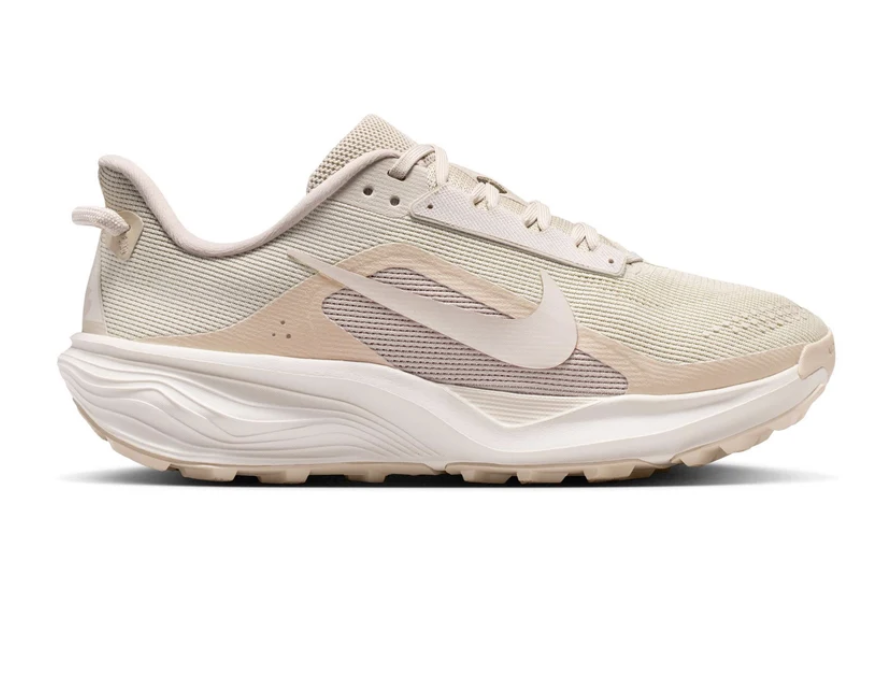
The new 2026 Nike ACG Pegasus Trail is essentially a highly versatile road-to-trail shoe. Nike combines ReactX cushioning with its improved All Terrain Compound outsole, a wider forefoot, and an 8mm drop to create a comfortable shoe that transitions naturally between pavement, gravel, packed dirt, and moderately technical trails. Nike itself classifies the shoe for moderately technical terrain.
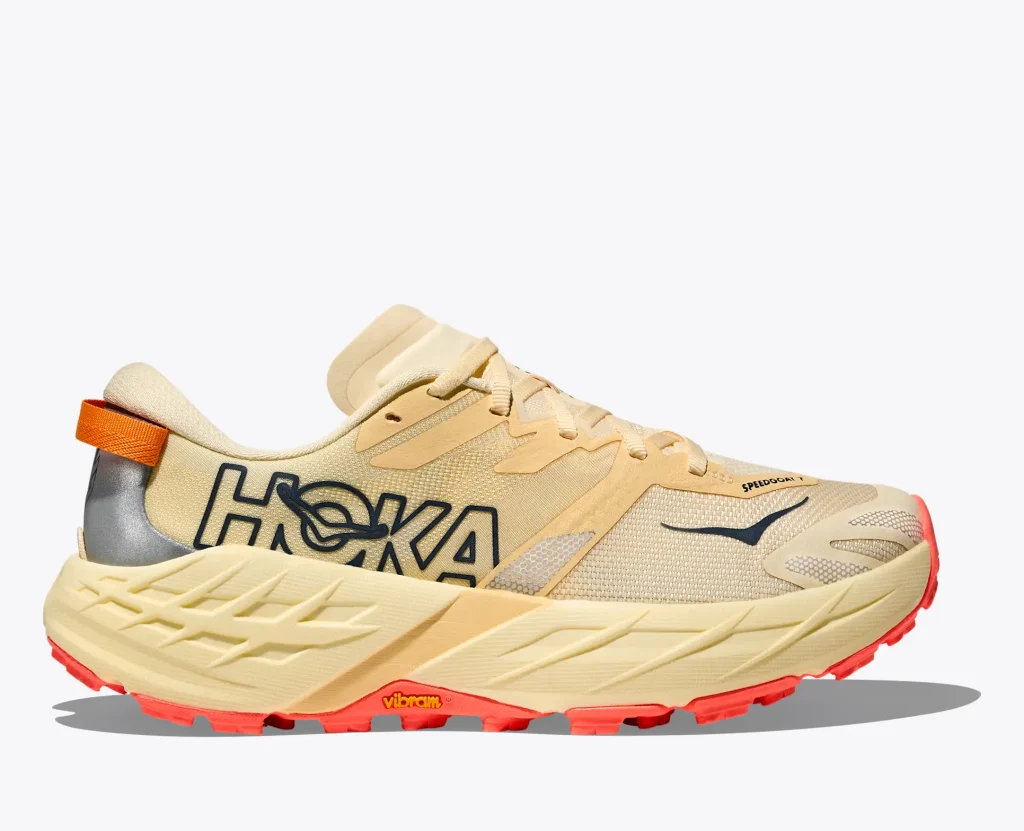
The HOKA Speedgoat 7, on the other hand, is a more specialized trail-running shoe. It combines a new supercritical EVA midsole with Vibram Megagrip, 5mm Traction Lugs, a more protective platform, and a 5mm advertised drop. It is specifically designed to provide grip and confidence on steep, loose, rocky, and technical terrain.
In simple terms:
Nike ACG Pegasus Trail = better versatility, road-to-trail comfort, and everyday use.
HOKA Speedgoat 7 = better grip, technical-trail performance, and long-distance protection.
Midsole and Running Feel
The Nike ACG Pegasus Trail uses ReactX foam, with Nike adding more foam than in the previous Pegasus Trail generation. The higher-volume midsole is designed to provide a combination of cushioning, energy return, and stability without making the shoe excessively aggressive.
Independent laboratory testing reinforces that description. RunRepeat measured strong shock absorption of 135 SA in the heel and 106 SA in the forefoot, although its measured energy return was more moderate at 57.7% in the heel and 56.3% in the forefoot. The result is a comfortable, predictable ride rather than an extremely bouncy or race-oriented one.
The Speedgoat 7 receives a more significant midsole update. HOKA has moved away from the traditional CMEVA construction of previous Speedgoat generations and introduced supercritically foamed EVA. HOKA says the new material improves responsiveness while maintaining stability on uneven terrain.
RunRepeat measured 131 SA of heel shock absorption and an impressive 116 SA in the forefoot. Energy return reached 54.4% at the heel and 60.4% at the forefoot, making the new Speedgoat more responsive than previous generations, particularly during toe-off.
The Nike feels more natural when transitioning between road and trail, while the HOKA feels more purpose-built for spending several hours off-road.
Mixed-terrain versatility: Nike ACG Pegasus Trail.
Technical-trail cushioning: HOKA Speedgoat 7.
Cushioning and Long-Distance Comfort
Both shoes provide substantial cushioning, but the Speedgoat 7 offers the more protective platform.
Independent measurements put the Speedgoat 7 at approximately 37.7mm in the heel and 30.3mm in the forefoot. Compared with the previous generation, HOKA has significantly increased the amount of cushioning underneath the foot, improving its suitability for longer distances.
The ACG Pegasus Trail was measured at approximately 34.1mm in the heel and 25.6mm in the forefoot. That still provides plenty of protection for daily trail running and longer outings, but it maintains more of the moderate platform expected from a versatile road-to-trail shoe.
For a 10K trail run involving some pavement and relatively smooth tracks, the Nike's setup is arguably more versatile.
For a 30K, 50K, ultra-distance outing, or several hours over rocks and uneven terrain, the additional cushioning and trail-oriented construction of the Speedgoat 7 become more valuable.
Long-distance trail winner: HOKA Speedgoat 7.
Technical Terrain
The Speedgoat 7 is the stronger shoe once the trail becomes genuinely difficult.
Its combination of 5mm Vibram Megagrip lugs, wide platform, protective cushioning, controlled midsole, and secure upper creates a shoe specifically designed for uneven surfaces. HOKA describes the model as offering a responsive ride for technical terrain and emphasizes its ability to grip rock and bite into loose ground.
The ACG Pegasus Trail can handle moderate technical sections, and Nike has improved both its outsole and forefoot stability. However, its primary strength remains versatility. Nike itself describes it as a shoe that combines the responsiveness associated with road running with trail-specific traction.
RunRepeat similarly classifies the Nike primarily as a gravel and road-to-trail shoe and notes that dedicated trail runners tackling particularly difficult routes may find its hybrid design compromised.For easy and moderate trails, both work.
For difficult mountain trails, the Speedgoat 7 is considerably more appropriate.
Road-to-Trail Running
The advantage completely reverses when part of your route involves pavement.
The ACG Pegasus Trail was specifically developed to maintain a road-shoe-like feel while adding trail capability. Its smaller lugs, ReactX cushioning, moderate stiffness, and 8mm drop allow it to behave naturally on asphalt while still providing enough grip when the surface changes to gravel or dirt.
This makes it particularly useful for runners who leave their house on pavement, run several kilometres to a trail, complete the off-road portion, and then return home on the road.
The Speedgoat 7 can obviously run on asphalt, but its aggressive 5mm lugs and trail-specific geometry are unnecessary on paved surfaces. Its biggest advantages only become relevant once conditions become more demanding.
Road-to-trail winner: Nike ACG Pegasus Trail.
Weight
Despite being the more aggressively equipped trail shoe, the Speedgoat 7 is surprisingly competitive in weight.
HOKA lists the men's Speedgoat 7 at approximately 275 grams, while Nike lists the men's ACG Pegasus Trail at approximately 305 grams in a US men's size 10. Brand weight measurements can use different sample sizes, so they should not be treated as a perfectly controlled comparison, but the published figures still show that the Speedgoat is not an especially heavy technical-trail shoe.
RunRepeat measured its Nike test sample at 289 grams, also reinforcing that the ACG Pegasus Trail prioritizes durability and cushioning over being an ultralight trail racer.
For runners chasing a particularly light and agile trail shoe, neither model belongs to the minimalist racing category, but the Speedgoat 7 offers an impressive weight-to-protection ratio.
Weight advantage: HOKA Speedgoat 7.
Stability
Nike has redesigned the toe box and forefoot of the ACG Pegasus Trail to provide more room and increase stability. The wider platform allows the toes to spread more naturally and gives the runner a broader base when climbing and descending.
HOKA also places considerable emphasis on stability. The Speedgoat 7 uses a wide base and Active Foot Frame geometry to create inherent support without turning the shoe into a conventional stability model. HOKA classifies it as neutral but moderately stable.
On relatively flat surfaces, both feel secure.
On rough technical terrain, however, the Speedgoat's combination of outsole grip, wide base, and controlled supercritical foam gives it the stronger overall stability package.
Technical stability winner: HOKA Speedgoat 7.
Speed and Faster Trail Running
The Speedgoat name might suggest a racing-focused shoe, but the seventh generation is primarily designed around confidence and long-distance performance rather than pure speed.
Its new supercritical EVA midsole improves energy return compared with previous Speedgoat models, and HOKA describes it as the most responsive Speedgoat yet.However, independent reviewers still characterize the shoe as stable and dependable rather than exceptionally agile. Its substantial platform can feel somewhat bulky for runners who prioritize ground feel and fast technical movements.
The Nike is smoother when running faster over gravel, fire roads, or mixed surfaces, but it does not have an especially high-energy midsole either. RunRepeat measured only moderate energy return from its ReactX foam.
So the difference depends heavily on terrain:
Fast gravel and mixed running: Nike ACG Pegasus Trail.
Fast technical trail running: HOKA Speedgoat 7.
Wet Conditions
Both shoes have improved wet-weather traction, but the Speedgoat remains the stronger choice.
Nike's new ATC compound is specifically designed to increase traction on wet surfaces compared with previous Pegasus Trail models.
HOKA's Vibram Megagrip outsole, however, combines aggressive 5mm lugs with Traction Lug technology. Both HOKA's specifications and independent testing indicate exceptional grip on slick rocks and difficult surfaces.
For occasional rain and wet gravel, the Nike should perform well.For wet mountains, mud, rocks, and steep descents, choose the Speedgoat.
Final Verdict
There is no universal winner because these shoes are designed for different purposes.
The Nike ACG Pegasus Trail is the better all-rounder. If your typical route consists of pavement, gravel, park trails, forest paths, light hiking, and occasional moderately technical sections, it is easier to recommend. Its ReactX cushioning, redesigned wider forefoot, improved ATC outsole, and road-friendly geometry make it one of Nike's most versatile trail options.
The HOKA Speedgoat 7 is the better pure trail-running shoe. Its supercritical EVA midsole, higher cushioning platform, Vibram Megagrip outsole, 5mm lugs, stable base, and improved responsiveness make it significantly more suitable for steep climbs, rocky descents, long mountain runs, wet conditions, and technical terrain.
If you want one shoe that can go from the road to the trail and still be comfortable for everyday use, choose the Nike ACG Pegasus Trail.
If your priority is serious trail running, technical terrain and long-distance mountain performance, choose the HOKA Speedgoat 7.For beginners and road-to-trail runners, the Nike is the more versatile choice. For experienced trail runners and more demanding terrain, the Speedgoat 7 is the stronger option.