
Check out the comparison of two 58″ 4K TVs, great for your living room!
Ideal fit and proposed use
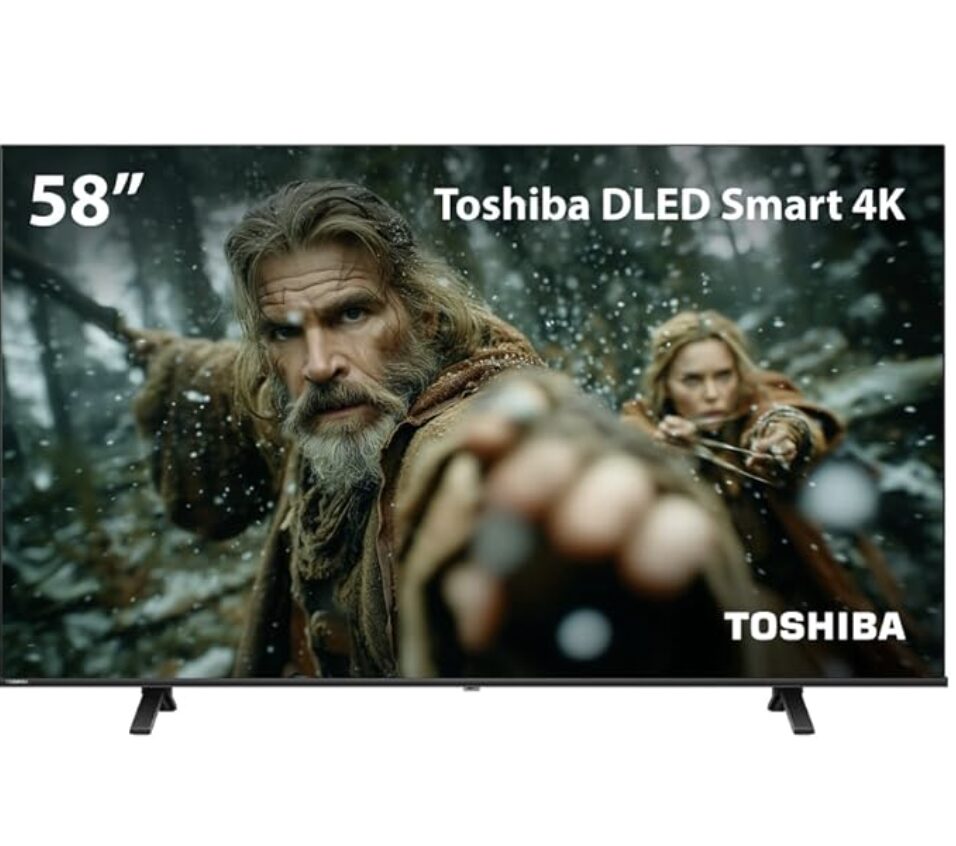
Toshiba 58C350NS (VIDAA)
Best fit: those who want a simple, straightforward 58" 4K TV with good physical connectivity for daily use (streaming + TV + console), without relying on advanced HDR features.
Highlight for 3 HDMI 2.0 and 2 USB, in addition to LAN/Ethernet and optical output (important for soundbar).
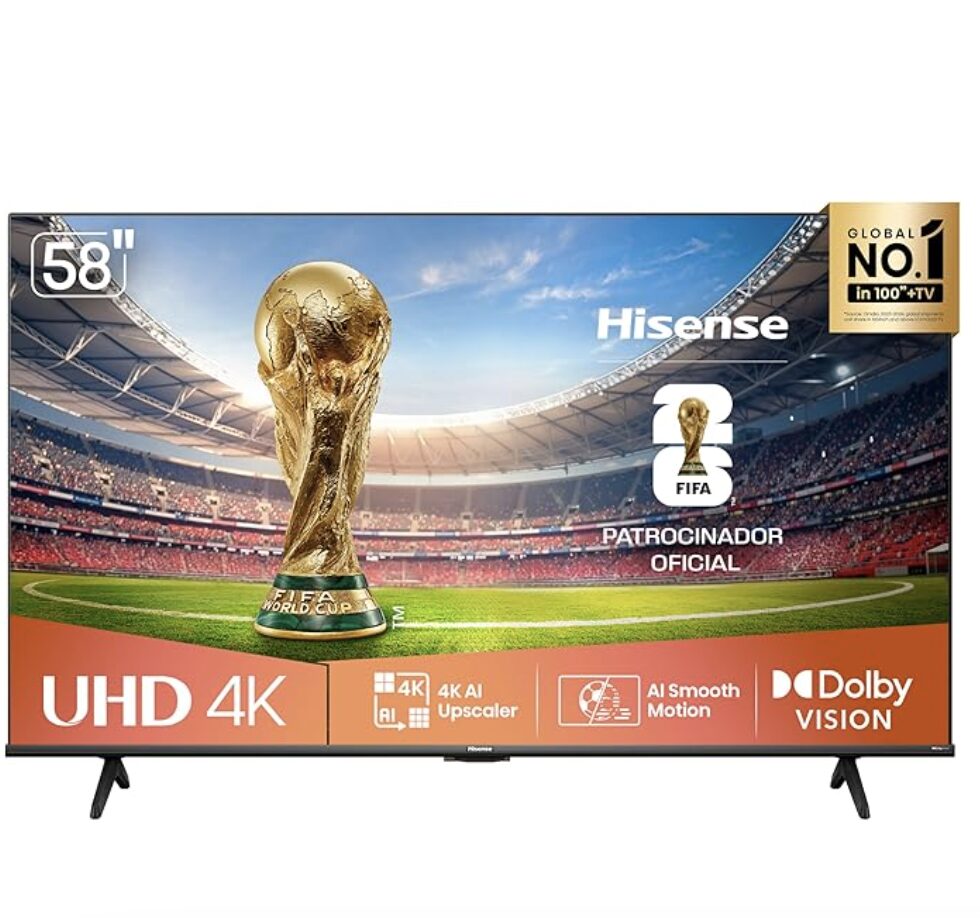
Hisense 58A6NV (Dolby Vision / DTS Virtual:X / Alexa/Google)
Best fit: those who want a 58" 4K TV with a focus on streaming image quality (Dolby Vision) and an audio/features package, as well as smart home integration.
It stands out for Dolby Vision + HDR10/HLG and DTS Virtual:X, as well as compatibility with assistants.
Image quality and HDR
Toshiba 58C350NS
Delivers 4K and a promise of "vibrant colours and precise brightness" in retail descriptions, but does not include, in the mentioned materials, the same explicit package of advanced HDR (e.g., Dolby Vision) as a central differentiator.
Practical reading: excellent for standard and 4K TV/streaming, but with less emphasis on "premium HDR."
Hisense 58A6NV
The main declared differentiator is the support for Dolby Vision (in addition to HDR10 and HLG), which can enhance the experience on compatible services (Netflix, Disney+, etc.), especially with mastered content.
Practical reading: if you consume a lot of HDR streaming, Hisense tends to deliver a stronger "package."
Sound and experience with games/movies
Toshiba 58C350NS
There is mention of Dolby Audio in the retail description, and it has an optical output for a soundbar/receiver, which is important for an audio upgrade.
Hisense 58A6NV
It features DTS Virtual:X and, in the line's materials, it appears alongside image/processing features (e.g., upscaler and game modes on the brand's pages for the A6 series).
Practical reading: for those who don't intend to buy a soundbar now, Hisense tends to be more attractive in the promised "virtual audio package."
System, apps, and voice integration
Toshiba 58C350NS (VIDAA)
Uses VIDAA and, in listings, it appears with support for popular streaming apps (e.g., Netflix/YouTube/Prime Video/Disney+ and others, as per the advertisement).
Hisense 58A6NV
It is also associated with VIDAA and, in addition, stands out for its compatibility with Alexa and Google Home, which is a differentiator for automation and voice control (depending on your routine).
Connectivity and practicality
Toshiba 58C350NS
Strengths
3 HDMI 2.0 + 2 USB, LAN/Ethernet, and optical output — a very good set for a room with a console + soundbar + TV box.
Hisense 58A6NV
Strengths
Typical connectivity with HDMI/USB/Wi-Fi/Bluetooth, in addition to the image/audio feature package and integration with assistants (as per retail).
For the purpose of watching movies and gaming
Ideal fit for your use: Hisense 58A6NV
Best fit: streaming with quality (HDR) + console with automatic adjustments and lower latency.
It stands out for Dolby Vision + HDR10/HLG (great for Netflix/Disney+/Prime on compatible titles).
For gaming, Hisense highlights Game Mode PLUS with VRR and ALLM, which is very relevant for PS5/Xbox in terms of fluidity and response.
Toshiba 58C350NS (VIDAA)
Best fit: general room use (standard TV/streaming) + console in a more "simple" way, with good connectivity.
The well-documented strong point is the physical connectivity (3 HDMI 2.0, 2 USB, optical, and LAN).
For "premium" HDR cinema/streaming, it does not appear with the same explicit package (e.g., Dolby Vision) as a central highlight in the materials reviewed.
Image for movies and series
Hisense 58A6NV — positive points
Dolby Vision: tends to deliver better results in content mastered in DV (more nuance in light/shadow and better "creator's intent," when well implemented).
It also supports HDR10 and HLG, covering the most common streaming and TV formats.
Toshiba 58C350NS — positive points
4K image and a "straight to the point" usage proposal, good for streaming and daily TV.
Practical reading: if you consume a lot of Netflix/Disney+/Apple TV+ and want to take advantage of HDR, Hisense has the advantage in terms of specifications.
Games on PS5/Xbox
Hisense 58A6NV — positive points
VRR (Variable Refresh Rate): helps reduce frame tearing and improve smoothness in compatible games.
ALLM (Auto Low Latency Mode): automatically puts the TV in low latency mode when it detects a console.
Mention of Game Mode PLUS / Game Bar in brand materials, which makes adjustments during the game easier.
Toshiba 58C350NS — positive points
3 HDMI 2.0: convenient for connecting PS5 + Xbox + soundbar/TV box without having to swap cables.
Important point (realistic): in 58" TVs of this category, it is common for the panel to be 60 Hz, so the "jump" to 120 Hz usually requires a different product range. Here, what matters most is game mode, latency, and features like VRR/ALLM — and in this, Hisense is more clearly positioned.
Audio and experience without a soundbar
Hisense 58A6NV
DTS Virtual:X: promise of a wider/virtualized soundstage, which helps in movies and games when you don't have a soundbar yet.
Toshiba 58C350NS
Highlight Dolby Audio in descriptions and good connectivity for upgrade (optical output).
Negative points and limitations
Hisense 58A6NV — negatives
You might end up paying for features (Dolby Vision, DTS Virtual:X, VRR/ALLM) if you don't consume HDR and don't play games frequently.
Even so, for your profile (movies/series + console), these features tend to be well utilised.
Toshiba 58C350NS — negatives
For its focus (cinema/streaming with HDR + console), it appears with less emphasis on advanced image and gaming features in the materials reviewed, which may mean a less "complete" experience for PS5/Xbox and premium HDR.
Objective recommendation by scenario
I want cost-effectiveness with strong connectivity and general use (streaming + console + soundbar): Toshiba 58C350NS.
I want a better "package" for streaming with HDR (Dolby Vision) + virtual audio + integration with assistants: Hisense 58A6NV.