

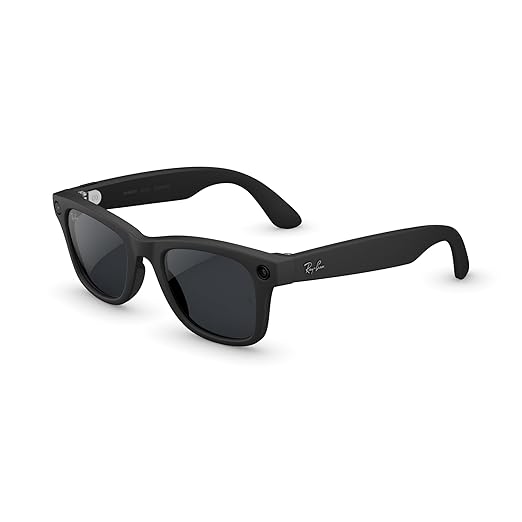
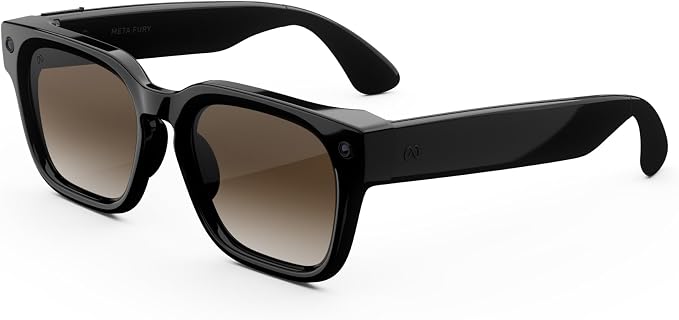
Looking for AI glasses with hands-free photography, open-ear audio, voice assistance and real-time translation? The Ray-Ban Meta Wayfarer (Gen 2) and Meta Fury share many core technologies but target different buyers.
The Wayfarer Gen 2 combines Meta’s technology with Ray-Ban’s familiar design language. It is the more traditional premium option, with two frame sizes and several lens choices.
The Meta Fury belongs to Meta’s newer self-branded collection developed with EssilorLuxottica. It offers a bolder frame, greater fit adjustment, six microphones, a dedicated AI button and a lower starting price.
Main Difference
The main difference is not camera quality or access to Meta AI. It is the balance between style, fit and value.
The Ray-Ban Meta Wayfarer Gen 2 is designed to resemble conventional premium sunglasses. Its classic shape helps the camera, speakers and other electronics blend into a frame that already looks familiar.
The Meta Fury has a thicker, more expressive silhouette. It is available in a standard size with an adjustable bridge, while the Wayfarer comes in standard and large sizes with a traditional high-bridge fit.The Fury starts at $299 in the United States. The Ray-Ban Meta Gen 2 family generally starts at $379, with higher prices for polarized, Transitions and prescription configurations.
Neither Model Has a Display
Neither model has a built-in visual display that projects information onto the lenses. There is no message screen, visual navigation interface or augmented-reality overlay.
Meta AI responses are delivered through the open-ear speakers, while photos, videos and additional information are viewed through the connected smartphone and Meta AI app.
These products are therefore better understood as smart camera and audio glasses than as full augmented-reality devices. Meta sells its display-equipped glasses as a separate product category.
Display winner: Tie — neither model has one
Design and Everyday Appearance
The Wayfarer Gen 2 is the more discreet and established design. Its recognizable shape should fit more naturally into casual, professional and social environments, particularly for buyers who do not want their glasses to look overly technological.
The Fury is more visually assertive. Meta describes it as a bold frame, and its thicker square design is intended to become part of the wearer’s style rather than disappear into it. It is part of a broader collection containing several frame colors and lens combinations.
The Wayfarer is the safer option for buyers who prefer a classic appearance. The Fury is better for someone who wants a modern statement frame.
Best classic design: Ray-Ban Meta Wayfarer
Best bold design: Meta Fury
Fit and Comfort
Fit may be the most important practical difference.
The Wayfarer Gen 2 is available in standard and large sizes, giving buyers two overall frame widths. However, it uses a fixed high-bridge design, so choosing the correct size remains important.
The Fury is sold in a standard size but offers more physical adjustment. Meta built the new collection with three-way adjustable nose pads, flexible over-extension hinges and adjustable temple tips. These features can change how high the frame sits, how close it is to the face and how pressure is distributed.
The Fury may fit a wider range of nose shapes, while the Wayfarer has the advantage for users who specifically need a larger frame.
Because both products contain batteries, cameras, microphones and speakers, they will normally feel heavier than standard non-electronic glasses. Trying the frames in person is advisable when possible, particularly for all-day wear.
Best adjustability: Meta Fury
Best size selection: Ray-Ban Meta Wayfarer
Camera and Video Recording
Both glasses use a 12-megapixel ultra-wide camera and can record video at up to 3K resolution.
The camera captures the wearer’s point of view for travel clips, family moments, demonstrations and short social videos. Recording can begin through a physical button or supported voice commands.
Both models also provide 32 GB of internal storage. Official specifications indicate space for hundreds of photos and more than 100 short videos, although the exact capacity depends on resolution, recording length and software settings.
Because the camera hardware is closely matched, image quality should not determine the purchase. Lighting, framing and stabilisation will have more practical impact.
The camera is also positioned near one side of the frame rather than directly between the wearer’s eyes. As a result, the captured angle may differ slightly from what the user believes is centered.
Camera winner: Tie
Meta AI and Voice Controls
Both models provide hands-free access to Meta AI. Users can ask questions, identify objects, learn about landmarks, request recommendations, control audio and use the camera as visual context for supported multimodal questions.
The Fury has one clear hardware advantage: a dedicated action button that can quickly activate Meta AI or launch another preferred feature. This is useful when the wearer does not want to say “Hey Meta” aloud.
Meta launched its self-branded glasses with its rebuilt Meta AI experience powered by Muse Spark from day one in the United States and Canada, with wider availability planned. The Wayfarer Gen 2 remains part of the same broader platform and receives software updates, so many AI functions overlap.
Availability varies by country, language, account and software version. Buyers outside major launch markets should confirm which AI, translation and communication features are supported in their region.
AI-control winner: Meta Fury
Lens and Prescription Options
The Wayfarer benefits from Ray-Ban’s established optical catalog. Buyers can choose from clear, traditional sun, polarized, Transitions and prescription lenses, depending on the selected configuration.The frame is also offered in standard and large sizes, providing more flexibility when combining facial fit with prescription requirements.
The Fury is also prescription-ready and is offered in several frame and lens combinations. Meta lists support for a broad prescription range, although availability depends on the retailer, lens material and prescription complexity. Its adjustable bridge may improve comfort for users who struggle with fixed plastic frames.
For primary prescription use, professional fitting remains important because bridge position, lens thickness and temple alignment can affect comfort and camera positioning.
The Fury offers more adjustment, but the Wayfarer provides the more established optical experience and two frame sizes.
Lens and prescription winner: Ray-Ban Meta Wayfarer
Final Verdict
The Meta Fury is the better value for most technology-focused buyers. It provides nearly the same essential camera, audio and AI capabilities as the Wayfarer Gen 2 while adding more fit adjustment, an extra microphone and a dedicated AI button at a lower starting price.
The Ray-Ban Meta Wayfarer Gen 2 is the better lifestyle and optical choice. Its recognisable styling, two frame sizes, established lens catalogue, and stronger charging-case capacity make it easier to use as a genuine everyday pair of premium glasses.
Choose the Fury for value, fit flexibility and newer physical controls. Choose the Wayfarer Gen 2 for classic design, optical versatility and Ray-Ban branding.